





One of my favorite things to do when visiting Amish country is buying fresh eggs. Why?
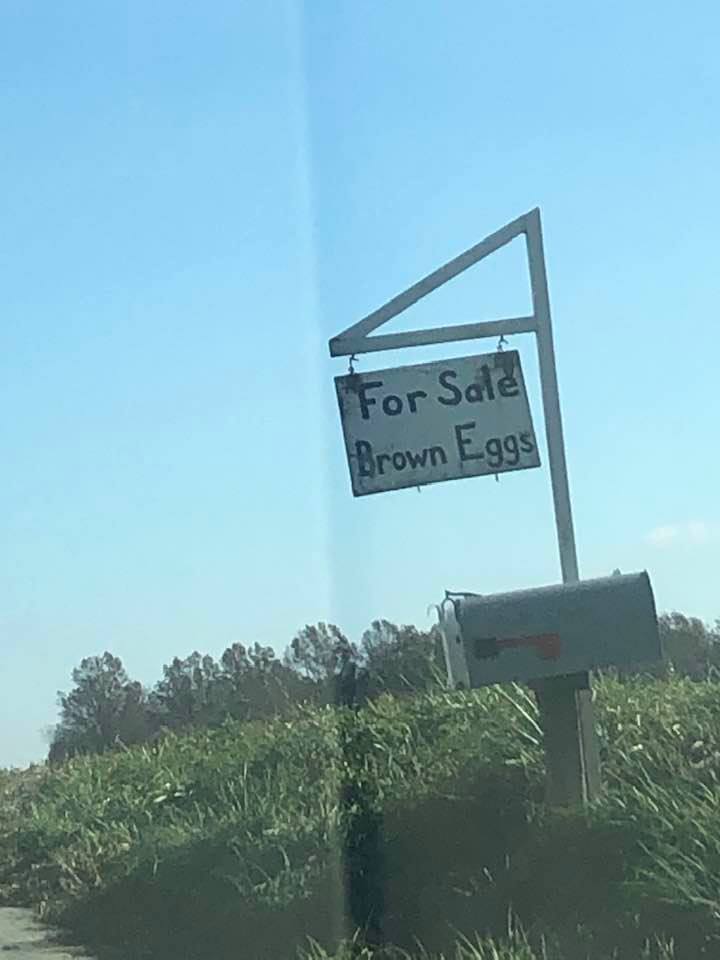
Well, the reason goes beyond eggs. Yes, the eggs are nice, but so is the interaction. Looking for handmade signs by the road pointing the way down a long driveway to buy some fresh eggs is part of the fun of visiting Amish country. The occasion gives you a chance to get onto an authentic Amish farm and interact with the Amish in a non-touristy setting.
Why Amish Eggs Often Sit Out — and Why That's Fine
Okay, now I did some research – non AI research (yes, there is still such a thing) – about eggs In the United States and found that commercial egg producers are required to wash and seemingly sterilize eggs before selling them. Yes, this removes dirt and bacteria, but it also strips away something called the "bloom", a natural protective coating the hen deposits on the egg as she lays it (SIGH, city boy, all new stuff for me).
That bloom seals the eggshell's pores and acts as a barrier against bacteria. Once it's washed off, the egg becomes more porous and vulnerable to contamination, which is why the USDA requires refrigeration for commercially washed eggs.

Amish farmers, who typically sell eggs directly from the farm, often skip the industrial washing process. An unwashed egg with its bloom intact can safely sit at room temperature for several weeks — which is why you'll see a bowl of eggs on the kitchen counter of an Amish home without anyone giving it a second thought. And I can tell you I have bought plenty of unrefrigerated eggs from Amish homes, enjoyed them plenty, and never gotten sick.
In most of Europe, Asia, and elsewhere in the world, eggs are sold and stored at room temperature as a matter of course. The American refrigeration requirement is the exception globally, not the rule.
The bottom line: Unwashed farm eggs with the bloom intact don't require refrigeration. Once an egg has been washed — whether at a commercial facility or at home — it should be refrigerated.
Are Amish Eggs Safe to Eat?
Yes, with the same common-sense precautions that apply to any eggs. Salmonella is always the concern with raw or undercooked eggs, and it can occur in farm eggs just as it can in commercially produced ones. The bloom does offer some protection, but it isn't a guarantee.
A few things to keep in mind:
- If you buy farm eggs and the shells have visible dirt or manure, give them a gentle wipe before cracking — but wait to wash them until right before use, so you preserve the bloom as long as possible.
- If you're cooking for young children, elderly people, pregnant women, or anyone with a compromised immune system, cook eggs fully.
- Trust your nose. A bad egg announces itself unmistakably.
Amish hens are typically free-range and pasture-raised, which means they get sunlight, fresh air, and a varied diet of bugs, grass, and grain. This is generally considered a healthier environment than industrial confinement operations, though it doesn't make the eggs immune to contamination. Yes, there is something so….non-factory farm-appealing about seeing hens pecking at scraps and seeds as they roam freely on an Amish farm.
Are Amish Eggs Actually Better?

Um….my answer is definitely yes, BUT, not necessarily just “Amish eggs”, it could be farm fresh eggs from any farmstead. The Amish part is incidental. Still, crack a fresh Amish egg or any farm egg next to a grocery store egg and the difference is usually visible before you even taste it. The yolk from a pasture-raised hen is noticeably deeper in color — a rich, almost orange-yellow — compared to the pale yellow of a typical supermarket egg.
That color difference isn't cosmetic. It reflects the hen's diet. Pasture-raised hens that eat insects, grass, and varied vegetation produce eggs higher in (according to Wikipedia and several other online non-AI sources!):
- Omega-3 fatty acids — important for heart and brain health
- Vitamin D — which many Americans are deficient in
- Vitamin E — an antioxidant
- Beta-carotene — which accounts for that deeper yolk color
Multiple studies, including research published by Penn State, have found that eggs from pasture-raised hens contain meaningfully higher levels of these nutrients compared to conventionally produced eggs.
The taste difference is real, too. I'm not someone with an especially refined palate, but even I can tell the difference. A fresh farm egg has a richer, fuller flavor — the yolk is creamier, and the white is firmer. If you've only eaten grocery store eggs your whole life, a fresh Amish egg can be a genuine revelation.
Farm Fresh vs. Grocery Store: What You're Really Getting
Most eggs in American supermarkets come from hens raised in industrial laying facilities, often in cages with very little space to move. Even "cage-free" and "free-range" labels can be misleading — "cage-free" simply means the birds aren't in individual cages, but they may still be crowded indoors. "Free-range" requires only that hens have access to the outdoors, not that they actually spend meaningful time there.
"Pasture-raised" is the label that most closely approximates what Amish hens experience — genuine outdoor access with space to roam. Look for that term if you can't get eggs directly from a farm.
When you buy eggs from an Amish family or a small local farm, you're typically getting:
- Eggs from hens that spend time outdoors
- A fresher product (sold within days of laying, rather than weeks)
- Eggs that haven't been industrially washed
- A direct connection to the people raising your food
How to Tell If a Farm Egg Is Fresh
The classic float test works: fill a bowl with cold water and gently drop in the egg. A fresh egg sinks and lies flat on its side. An older egg stands upright or floats — the air cell inside expands as the egg ages, making it buoyant. A floating egg should be discarded.
Fresh eggs also have a firmer white that holds its shape when cracked into a pan, and a yolk that sits up high rather than spreading flat.
Where to Find Amish Eggs
If you live in or near Amish country — Ohio, Indiana, Pennsylvania, and parts of a dozen other states — roadside farm stands are your best bet. Keep an eye out for hand-lettered signs. Eggs are often sold on the honor system, with a small box for your money.
Farmers markets are another reliable source. Look for vendors who can tell you specifically how their hens are raised. If someone can describe the farm, the flock size, and what the hens eat, that's a good sign.
The Short Answer
Amish eggs are generally fresher, more nutritious, and better tasting than conventional grocery store eggs. They often don't need refrigeration if the bloom is intact, though refrigerating them is never a bad idea once they're home. They're as safe to eat as any other egg, and the same basic food safety practices apply.
If you have the chance to pick up a dozen from a farm stand, do it. Crack one next to your usual grocery store egg and see for yourself.
I have bought plenty of warm, dirty eggs from Amish farms, but you just wash them, stick them in the fridge (I mean, I just do, but you wouldn’t HAVE to) and enjoy!





Leave a Reply