






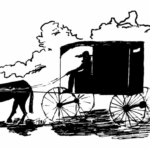
While both groups are known for strong family values and distinctive lifestyles, the Amish and Mormons represent very different approaches to faith, community, and engagement with modern society.

I'm often asked about the differences between the Amish and Mormon communities, and I understand the curiosity. Both groups are distinctly American religious movements known for their strong family values, unique practices, and somewhat separate lifestyles. However, beyond these surface similarities, they represent fundamentally different approaches to faith, technology, and interaction with the broader world.
Having spent years documenting Amish life and having Mormon friends and neighbors, I've learned that while both communities deserve respect and understanding, their differences are far more significant than their similarities. Let me walk you through what makes each group unique.
Historical Origins
The Amish
The Amish trace their roots to 16th-century Europe, specifically to the Swiss Anabaptist movement. Jakob Ammann, for whom they're named, led a split from other Mennonites in 1693 over issues of church discipline and lifestyle practices.
Key historical points:
- European origins in Switzerland and Germany
- Part of the Protestant Reformation challenging Catholic practices
- Persecution in Europe led to immigration to America starting in 1737
- Continuous history spanning over 300 years
- No single founder but evolved from broader Anabaptist movement
The Mormons (LDS)
The Church of Jesus Christ of Latter-day Saints was founded in 1830 by Joseph Smith Jr. in New York State. Smith claimed to have received divine revelations and golden plates that he translated into the Book of Mormon.
Key historical points:
- American origins in 19th-century New York
- Specific founder (Joseph Smith Jr.)
- Relatively recent establishment (1830)
- Westward migration to Utah following persecution
- Claims of restored Christianity rather than reformation
Core Religious Beliefs
Amish Beliefs
The Amish follow traditional Christian doctrine based on biblical interpretation:
Biblical foundation: Scripture is the ultimate authority
Trinity: Traditional Christian belief in Father, Son, Holy Spirit
Salvation: Through faith in Jesus Christ
Adult baptism: Voluntary choice made in adulthood
Simple living: Biblical mandate to live simply and humbly
Nonresistance: Pacifism based on Jesus's teachings
Separation: "Be not conformed to this world" (Romans 12:2)
Mormon Beliefs
Mormons hold some beliefs that differ significantly from traditional Christianity:
Additional scriptures: Book of Mormon, Doctrine & Covenants, Pearl of Great Price
Continuing revelation: Modern prophets receive ongoing revelation
Godhead: Father, Son, and Holy Ghost as separate beings
Plan of salvation: Multiple levels of heaven and eternal progression
Temples: Sacred ordinances performed in special temples
Eternal families: Marriage and family relationships continue after death
Priesthood: Lay priesthood for worthy males
Lifestyle and Technology
Amish Approach to Modernity
Selective technology use: Each community decides which technologies align with their values
Horse and buggy: Most groups still use traditional transportation

Plain dress: Simple, modest clothing without decorative elements
Limited electricity: Many groups avoid connection to public power grids
Agricultural focus: Farming remains central to many communities
Education: Typically ends after 8th grade
Isolation by choice: Deliberate separation from mainstream society
Mormon Approach to Modernity
Technology embracing: Generally adopt new technologies readily
Modern dress: Conservative but contemporary clothing styles
Higher education: Strongly encouraged, including for women
Professional careers: Members in all professions and industries
Global presence: Active missionary work worldwide
Modern conveniences: Full participation in contemporary society
Media involvement: Own television stations, universities, and businesses
Community Structure and Organization
Amish Community Organization
Local autonomy: Each church district governs itself
Bishop leadership: Chosen by lot from community members
Geographic concentration: Communities cluster in rural areas
Limited size: Church districts typically 20-40 families
Informal structure: Minimal formal organization beyond local level
Consensus decision-making: Community decisions made collectively
Self-sufficiency: Communities aim to meet their own needs
Mormon Community Organization
Hierarchical structure: Centralized leadership from Salt Lake City
Professional clergy: Paid leadership at higher levels
Global organization: Worldwide presence with standardized practices
Large congregations: Wards (congregations) can have hundreds of members
Formal structure: Detailed organizational chart and procedures
Institutional support: Extensive church-wide programs and services
Integration: Members encouraged to be active in broader society
Family Life and Gender Roles
Amish Family Structure
Traditional roles: Men typically work outside home, women manage household
Large families: Often 6-8 children, sometimes more
Extended family: Multiple generations often live nearby
Simple weddings: Modest ceremonies within the community
No divorce: Marriage considered permanent
Gender separation: Some activities and responsibilities divided by gender
Child labor: Children help with family farm and business operations
Mormon Family Structure
Traditional values: Strong emphasis on family but more flexibility in roles
Family size: Generally larger than national average but varies widely
Family activities: Formal programs like Family Home Evening
Temple weddings: Sacred ceremonies in LDS temples
Eternal marriage: Belief that families can be together forever
Gender roles: Traditional but evolving with modern society
Education emphasis: Both boys and girls encouraged to pursue education
Economic Approach
Amish Economics
Agricultural base: Farming and related trades predominate
Small businesses: Family-operated shops and services
Cash economy: Limited use of credit and modern banking
Mutual aid: Community supports members in crisis
Simple living: Emphasis on needs rather than wants
Local trade: Preference for local and community-based commerce
Inheritance patterns: Farms typically passed to sons
Mormon Economics
Diverse occupations: Members in all professions and industries
Business success: Many successful entrepreneurs and executives
Tithing: Members give 10% of income to church
Welfare system: Extensive church welfare program
Investment: Church has significant business and real estate holdings
Global economy: Full participation in worldwide markets
Educational investment: High value placed on education and professional development
Relationship with Government and Society
Amish Civic Engagement
Limited participation: Minimal involvement in politics
Conscientious objection: Pacifist beliefs prevent military service
Tax compliance: Pay most taxes but exempt from Social Security
Legal accommodation: Seek religious exemptions from various laws
Jury service: Generally avoid due to judgment concerns
Voting: Participation varies but often limited
Public office: Rare to hold elected positions
Mormon Civic Engagement
Active participation: Encouraged to be involved in civic life
Political diversity: Members across political spectrum (though historically conservative)
Military service: Proud tradition of military service
Public service: Many members serve in elected office
Community involvement: Active in local organizations and causes
Patriotism: Strong tradition of American patriotism
Global citizenship: International members adapt to local political systems
Education Philosophy
Amish Education
Eight grades: Formal education typically ends after 8th grade
Practical focus: Emphasis on skills needed for community life
One-room schools: Traditional classroom settings
German language: High German taught for religious purposes
Limited curriculum: Basic reading, writing, arithmetic
Community teachers: Often young unmarried women from community
Apprenticeship: Learning through hands-on experience after school
Mormon Education
Higher education: Strongly encouraged for both men and women
University system: Operates Brigham Young University and other schools
Secular subjects: Full participation in modern educational system
Seminary/Institute: Religious education alongside secular schooling
Scholarship: Many members pursue advanced degrees
Professional preparation: Education seen as preparation for careers
Global perspective: International educational programs and exchanges
Interaction with Outsiders
Amish Relationships with "English"
Limited but friendly: Polite relationships with neighbors
Business interactions: Sell products and services to outside community
Tourism: Some communities accommodate respectful visitors
Professional services: Use outside doctors, lawyers when needed
Cultural barriers: Language and lifestyle differences create distance
Selective engagement: Choose carefully which interactions to pursue
Boundary maintenance: Clear distinction between community and outside world
Mormon Relationships with Non-Members
Active engagement: Encouraged to have friendships with non-members
Missionary work: Formal programs to share faith with others
Community involvement: Participate in local organizations and causes
Professional networks: Full participation in business and professional life
Interfaith dialogue: Engage with other religious communities
Global presence: Members integrated into societies worldwide
Cultural adaptation: Adapt practices to local customs while maintaining core beliefs
Misconceptions and Stereotypes
Common Myths About the Amish
❌ "They never use any technology" - They selectively adopt technology that aligns with their values
❌ "They're all farmers" - Many work in construction, furniture-making, and other trades
❌ "They never interact with outsiders" - They regularly do business with non-Amish neighbors
❌ "They don't pay taxes" - They pay most taxes except Social Security
❌ "They're uneducated" - They're highly skilled in their areas of expertise
Common Myths About Mormons
❌ "They still practice polygamy" - Mainstream LDS church banned polygamy in 1890
❌ "They can't drink caffeine" - Word of Wisdom prohibits coffee and tea, but not all caffeine
❌ "They're not Christians" - They consider themselves Christian but have some unique beliefs
❌ "They're all Republicans" - While many are conservative, political views vary
❌ "They can't associate with non-members" - They're encouraged to have diverse friendships
Geographic Distribution
Amish Locations
Concentrated settlements: Primarily in Pennsylvania, Ohio, and Indiana
Rural areas: Almost exclusively in agricultural regions
Growing communities: Expanding to new states for affordable farmland
Population: Approximately 350,000 across North America
Density: High concentration in specific counties and regions
Mormon Locations
Global presence: Members in nearly every country
Utah concentration: Highest percentage in Utah and surrounding states
Urban and rural: Present in cities and rural areas alike
Population: Approximately 16.8 million worldwide
Missionary presence: Active proselytizing in most countries
Food and Dietary Practices
Amish Food Culture
No dietary restrictions: No religious prohibitions on specific foods
Traditional cooking: Emphasis on hearty, simple meals
Garden fresh: Heavy use of home-grown vegetables and herbs
Preservation: Canning, smoking, and other traditional food preservation
Community meals: Regular church dinners and social gatherings
Seasonal eating: Diet varies with local growing seasons
Hospitality: Strong tradition of feeding guests and neighbors
Mormon Food Culture
Word of Wisdom: Guidelines prohibiting alcohol, tobacco, coffee, and tea
Food storage: Encouraged to maintain emergency food supplies
Fasting: Monthly 24-hour fast with donations to help poor
No dietary restrictions: Otherwise no specific food prohibitions
Modern diet: Full participation in contemporary food culture
Health emphasis: Focus on caring for body as temple
Community meals: Regular ward dinners and social events
Challenges and Adaptation
Modern Challenges for the Amish
Land costs: Rising real estate prices make farming difficult
Economic pressure: Need to balance tradition with economic survival
Youth retention: Keeping young people in community
Government regulation: Navigating modern legal requirements
Tourism impact: Managing visitor interest while maintaining privacy
Technology decisions: Constantly evaluating new technologies
Healthcare: Balancing traditional and modern medical approaches
Modern Challenges for Mormons
Cultural integration: Maintaining distinct identity in global society
Historical questions: Addressing complex aspects of church history
Generational differences: Adapting to changing social norms
Global diversity: Managing unity across diverse cultures
Scientific questions: Reconciling religious beliefs with scientific findings
Social issues: Navigating changing attitudes on social questions
Growth management: Maintaining community feel as membership grows
Similarities Despite Differences
While the differences are significant, there are some genuine similarities:
Strong families: Both prioritize family relationships and values
Community support: Mutual aid and community care
Moral standards: High ethical expectations for members
Religious devotion: Faith central to daily life and decisions
American experience: Both shaped by uniquely American religious freedom
Distinctive identity: Clear sense of group identity and belonging
Service orientation: Emphasis on helping others and community service
Understanding Through Respect
Both the Amish and Mormon communities deserve to be understood on their own terms rather than through stereotypes or superficial comparisons. Each represents a sincere attempt to live according to deeply held religious convictions while navigating the challenges of modern American life.
The Amish approach emphasizes separation from worldly concerns, simple living, and preservation of traditional ways. The Mormon approach emphasizes engagement with the world while maintaining distinct religious beliefs and practices.
Neither is better or worse than the other – they simply represent different solutions to the challenge of maintaining religious identity in a secular society. Both communities have successfully preserved their core values while adapting to changing circumstances, though they've chosen very different paths to do so.
Whether you're curious about plain living and traditional crafts or interested in modern religious movements and global organizations, both communities offer valuable insights into the diversity of American religious experience and the various ways people seek to live meaningful, purposeful lives guided by their deepest convictions.
For more information about specific Amish communities and their practices, explore our comprehensive guides to Amish settlements across America.


Leave a Reply