




Tucked away in the far southwest corner of the Show-Me State, Rich Hill, Missouri is home to a vibrant, produce-producing settlement of Old Order Mennonites. This small, isolated community offers a fascinating glimpse into one of the most conservative branches of the Mennonite faith—one so traditional that the average outsider would have difficulty discerning them from the Old Order Amish.
Community Overview
Founded: November 1997
Location: Rich Hill, Missouri (southwest Missouri)
Affiliation: Old Order Mennonite
Population: Approximately 35 families
Districts: Two districts (or communities)
Primary Industry: Commercial produce farming
Related Settlement: Richards, Missouri (10 miles south, started 5-6 years later)
What Makes Rich Hill Special
Old Order Mennonite Traditions
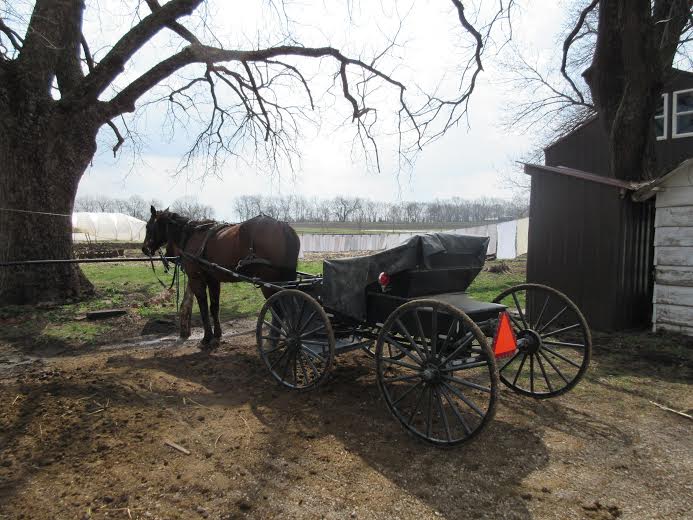
Rich Hill is home to Old Order Mennonites (OOMs), the most conservative branch of the Mennonite faith. Like their Amish neighbors, they still use horse-drawn buggies and maintain traditional lifestyles, but there are key differences that set them apart:
- Men rarely have beards (unlike Amish men who grow beards after marriage)
- Worship in church buildings (meetinghouses) rather than private homes like the Amish
- Open buggies are commonly seen clattering down rural roads
- Strong communal feeling enhanced by the settlement's small size and isolation
Agricultural Focus: A Produce Powerhouse
What truly distinguishes the Rich Hill community is their remarkable agricultural focus. According to Rich Hill Old Order Mennonite church member Arlene Brubaker, "Everyone in this community and also in the neighboring settlement 10 miles south (Richards, Missouri) raises produce."
The produce is "snapped up by big chain stores in the midwest who know that customers enjoy the organically grown produce." The community's agricultural success has created a sustainable economic foundation that supports all 35 families.
The Founding Story: Living in the "Hotel"
The Rich Hill community has a unique founding story that speaks to the cooperative spirit of Old Order Mennonites. When the settlement began in November 1997, all the founding families faced a challenge: they needed homes, but building takes time.
Their solution was ingenious and deeply communal. As Arlene Brubaker explains: "Everyone lived in a large 'hotel' as they called it until the houses were built. There were around 5 families living in it and of course the children had grand times but the parents were glad to have their own homes."
This "hotel"—likely a large existing building that the community purchased or converted—served as temporary housing for multiple families. While the children enjoyed the communal living arrangement, having playmates constantly available, the parents looked forward to establishing their individual family homes. This founding period exemplifies the balance between community cooperation and family independence that characterizes Old Order Mennonite life.
Agricultural Life: Family Farming at Its Finest
The Rich Hill Mennonites have turned produce farming into both an art and a family affair. Arlene Brubaker's vivid descriptions bring their agricultural life to life:
The Harvest Process
"Watermelons and tomatoes are fun. There are 'pickers', 'catchers', and 'labelers.' While the pickers pick, one person throws the tomato or melon to a 'catcher' on the wagon and on the wagon the young children label them."
This assembly-line approach to harvesting showcases the community's efficiency while involving every family member, from the youngest children to the adults. It's agricultural work as community building.
The Reality of Farm Life
"And let's not forgot tomato fights. 'Ugh, who gave me that rotten one?' There it goes. Tomatoes – usually rotten ones – are flying thick and fast until Dad says 'enough!.'"
This delightful detail reveals that even in the most conservative religious communities, children are still children, and work can still include play—at least until parental authority steps in.
Pumpkin Season
"The definition of pumpkins should be 'sore backs', but really it's interesting family fun to pick the loads and loads, bins and bins full of pumpkins. It's especially rewarding when Mom makes the family's favorite pie: pumpkin pie!"
Arlene's description captures both the physical demands of agricultural life and its rewards—the satisfaction of hard work followed by the simple pleasure of homemade pumpkin pie made from their own harvest.
Crops and Products
The Rich Hill community produces a diverse array of crops that supply both commercial buyers and local customers:
Major Crops
- Watermelons and cantaloupes (one of their largest crops)
- Tomatoes (a particular specialty)
- Pumpkins (harvested in massive quantities)
- Cucumbers
- Potatoes
- Green beans
- Peppers
Market Options
- Weekday market in Rich Hill where everyday people can purchase fresh produce
- Chain store contracts with major midwest retailers
- Direct sales to local customers during growing season
Visiting Rich Hill: A Personal Journey
[The following account is from my parents' visit to Rich Hill during their 47-year wedding anniversary trip through Missouri, Arkansas, and Kansas.]
Getting to Rich Hill proved to be quite an adventure for my parents. Since my Dad recently retired, they have more time for exploration, and I "deputized" them to visit some Old Order Mennonite friends of mine while they were in the area.
The journey wasn't without its challenges. I got this text from my Mom as they approached my friend's house: "We are on a rocky road in the middle of nowhere."
I wasn't sure whether that meant they needed help with directions, but apparently not. A short while later came the reassuring follow-up: "We found them and had a wonderful visit."
What Visitors Will Find
Based on my parents' reconnaissance mission, Rich Hill maintains its character as a small, isolated community. Other than the charming Cozy Nook Bookstore—which truly must be cozy since it's "out in the middle of nowhere"—there wasn't much commercial development visible to casual visitors.
My parents didn't observe the typical Plain community businesses like bakeries, bulk food stores, fabric shops, or harness shops during their visit. This doesn't necessarily mean these businesses don't exist, but it suggests that the Rich Hill community may be more focused on their agricultural enterprises than on developing a tourism or retail sector.
Either by design or simply because of its small size and isolation, the Rich Hill settlement has maintained a more communal, agricultural focus compared to some other Plain communities that have developed extensive retail operations.
The Greater Old Order Mennonite Network
The Rich Hill community isn't isolated—it's part of a broader network of Old Order Mennonite settlements across North America. According to Arlene Brubaker:
Settlement Locations
The Richards community, just 10 miles south of Rich Hill, started 5-6 years after Rich Hill was founded, suggesting that the success of the original settlement encouraged expansion in the area.
Planning Your Visit
What to Expect
- A small, rural community focused on agriculture
- Cozy Nook Bookstore as a notable local business
- Beautiful rural scenery with horse-drawn buggies
- Limited commercial tourist attractions
- Weekday produce market during growing season
Best Times to Visit
- Growing season (spring through fall) for fresh produce availability
- Harvest time to see agricultural activities
- Weekdays when the produce market operates
Visiting Tips
- Respect privacy and photography boundaries
- Cash transactions likely preferred
- Ask locally about current produce availability
- Be prepared for rural, remote locations
- Allow extra time for navigation on country roads
Getting There
Rich Hill is located in the far southwest corner of Missouri. Visitors should be prepared for rural roads and should allow extra time for navigation, especially when venturing to individual farms or businesses.
The Community Today
The Rich Hill Old Order Mennonite community represents a successful model of Plain community life built around sustainable agriculture. Their focus on produce farming has created economic stability while maintaining their traditional values and practices.
The community's agricultural success demonstrates that traditional farming methods, when applied with dedication and community cooperation, can compete effectively in modern markets. Their organic produce has found ready buyers among chain stores and individual customers who value quality and traditional growing methods.
Community Characteristics
Agricultural Excellence: Every family participates in produce farming, creating a unified economic foundation for the community.
Family Integration: Children participate in farm work from an early age, learning both agricultural skills and work ethic while contributing to family operations.
Market Success: Their produce has gained recognition among commercial buyers, providing sustainable income for all community families.
Community Cooperation: From the founding "hotel" arrangement to collaborative harvesting, the community emphasizes mutual support and shared responsibility.
Traditional Values: Despite their commercial success, they maintain Old Order Mennonite practices including horse-and-buggy transportation, plain dress, and traditional family structures.
Looking Forward
The Rich Hill community continues to thrive more than 25 years after its founding in 1997. Their successful integration of traditional values with commercial agriculture has created a sustainable model that supports growing families while maintaining their distinctive way of life.
For visitors interested in understanding how Plain communities adapt traditional practices to modern economic realities, Rich Hill offers valuable insights. Here, Old Order Mennonite families have found a way to preserve their faith and culture while building a prosperous agricultural enterprise that serves markets across the Midwest.
The community's story—from families sharing the founding "hotel" to children participating in tomato fights during harvest—illustrates how traditional communities can maintain their essential character while adapting to contemporary challenges. Their success suggests that the Rich Hill model may inspire similar agricultural settlements within the broader Old Order Mennonite community.
Whether you're interested in traditional farming methods, Plain community life, or simply want to purchase some of the finest organically grown produce in the Midwest, Rich Hill, Missouri offers a unique glimpse into a way of life that successfully bridges the past and present.
For more information about visiting during produce season or current market availability, inquire locally in Rich Hill about weekday market schedules and seasonal crop availability.




Janet Remlinger
Kevin,
How can I order the new book coming out in 2013? Will it have recipes in it as well?
thanks..janet
Kevin
Hi, Janet - the book will be out in the spring of 2013...You can order it from Amazon or any bookstore when it gets closer to release date..it'll have lots of recipes, Amish info, and beautiful photos! - Kevin
Yvette Burroughs
Please tell what the location of this market is in Rich Hill? I know about store off I-49 but they don't have produce there?
Also are there any other places like in Butler, Adrian or Archie?
Looking to buy bulk products for personal canning?
Heard not sure there is one by the lake of Ozarks?
Please contact me via [email protected] very much appreciated.