


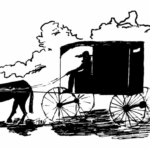


Horse-drawn buggies clatter their way back from town along a dusty gravel road on a quiet evening in this rural slice of Indiana countryside. One-room schoolhouses stand silent, waiting for boisterous youth to return the next morning. Laundry — in rich hues of blue, turquoise and rust — flaps in the late-day breeze.

Suddenly, riding on a westerly wind, faint at first but then louder, is a haunting, generations-old harmony of rich a cappella reminiscent of icy rivers, Alpine pastures and rich cheeses.
Yodeling.
It is one of many traditions that distinguishes this quiet corner of northeastern Indiana from every other Amish community scattered throughout the United States and Canada. In many ways these rural hinterlands have been frozen in time, rooted to their Swiss heritage. Yodeling music is piped out onto the main road in Berne. Edelweiss Florist is named after a white flower found high in the Alps. A local beauty salon goes by the name Swiss Hair-atage, and each July the city christens its new Swiss Miss. Cementing the city's ties with Switzerland is the completion of the clock tower in Berne, modeled after a similar one in Bern, Switzerland, that has stood sentinel over that city since the 15th century.
I have spent a lot of time in Adams County over the past twenty-plus years — more than enough to have complicated feelings about it. There's a deep sense of love for the area tinged with something else I can't quite explain. At least not yet. But whether you're visiting for the first time or the fifth, Berne will leave an impression unlike any other Amish community you've encountered.
The Amish have Berne have planted daughter communities elsewhere that also preserve these same Swiss customers. Seymour, Missouri is one of the largest.
A Community Unlike Any Other
Berne's Amish trace their roots to Switzerland and Alsace, France — whereas the vast majority of Amish elsewhere, including the Amish community 45 miles away in Fountain City, have German roots. While there are differences in dialect, song, and culinary customs, the Swiss Amish of Berne have much in common with Amish elsewhere: indoor plumbing and electricity are taboo, and travel is by horse-drawn buggy. Yet even the buggies they use are different from those seen in Fountain City and other communities.
The dialect difference is striking. The Swiss German spoken here is so distinct that Amish people from Berne conversing with Amish from other settlements might not be able to understand one another. You can cruise the grid of rural roads outside Geneva and Berne and feel a palpable sense of timelessness. To a great extent, what you're seeing today is what you would have seen yesterday and the year before. Sure, much of that is a mirage — beneath the surface the Amish here are changing, as everywhere else. But in some ways, this community is still genuinely true to its roots.
According to the 2010 U.S. Religious Census, 6,343 Amish lived in Adams County, which encompasses Berne and has some areas where a third of households are Amish. Families of 10 or more are common.
The Topless Buggy — and the Change That's Coming
In Berne, open buggies still ply the farmlands, their occupants shielded from fierce arctic gusts by mammoth wind-blocking umbrellas and thick horse blankets.
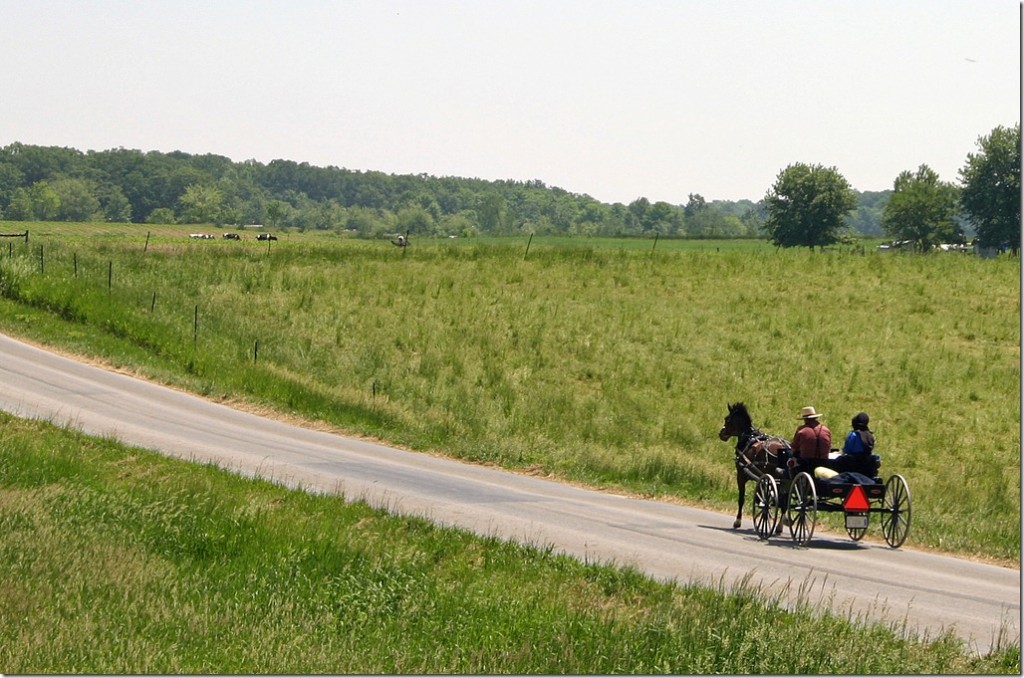
No one seems to know exactly why the Amish here have eschewed covered buggies for so long. Ask them and you'll typically get a shrug.
"I guess that's just what our church leaders thought was best, but we don't hold it against any of the churches who chose to have their buggies closed," said one diplomatic-sounding Amish man selling baked goods on the shoulder of busy U.S. Route 27. "By the way, we call them topless buggies," he said, guffawing.
The most common explanation given by non-Amish historians is that covered carriages are associated with European aristocracy and its excesses. However, covered buggies — once unthinkable on the roads near Berne — have become more common here after a local Amish church district broke ranks and approved them. On a recent day, covered buggies clattered into the McDonald's parking lot, their occupants shielded from the December chill by four walls and a roof. Some of the closed buggies have tiny propane heaters inside, and most have battery-operated windshield wipers.
"You'll see more and more of the covered buggies… I think it will come to pass," said Ben Girod, an Amish shoe store owner, as he stocked shelves of shoes and boots — all black — to cater to his Amish clientele.
Open buggies have been such a part of life in Berne for most of the past 150 years that some are reluctant to change. "I wouldn't want us to have closed buggies here. I would feel closed in," said Marie Graber, who runs a small bakery outside Berne.
Berne is bisected by Route 27. Although the highway's shoulders are outfitted with special buggy lanes to keep the horse-drawn traffic out of harm's way, cars and trucks still barrel past at interstate speeds. The closed buggies offer protection from loose gravel and spray on a rainy day. But the top-heavy closed buggies rock precariously when semi-trailer trucks pass.
Yodeling — A Tradition Under Pressure
At least on the surface, Berne's Swiss cultural heritage appears fixed. But the currents of change are running swift beneath. The iconic open buggies of Berne are dwindling in number. Culinary favorites like raisin pie and wedding nothings — traditional fried dough disks — are being displaced by Big Macs and empanadas. And the beloved practice of yodeling is being abandoned by the young and scorned by Amish elsewhere.
"I guess we'll just have to see what the future brings us," said a woman selling dry goods in a bulk food store outside Berne, her blue eyes gleaming behind wire-rim glasses, wisps of black hair peeking out from beneath a black head covering known as a kapp. Because Amish shy away from media, she and several others interviewed for this article requested that their names not be published.
Lucy Schwartz, wearing a hand-sewn dress in dark blue — a common hue among the Amish in Berne — has witnessed a lot of change over the years. Gravel roads that swirled up giant dust clouds have been paved over. Spacious parcels of property have been repeatedly subdivided. Her house sprawls from several additions to accommodate multiple generations; she and her husband, Dan Schwartz, have 87 grandchildren.
She worries certain traditions she has enjoyed her whole life, like yodeling, won't get passed along to younger generations. "I grew up with it. It's just in me," she said before belting out some joyful, harmonious bars mixed with a few lines of English.
"I don't think you hear [yodeling] among the young as much," Dan Schwartz said.
Amish youth are more likely to listen to country music on their smartphones. Smartphones are not officially permitted, but they are generally tolerated for youths, who are expected to give them up once they are baptized into the church.
Lucy Schwartz said families yodel whenever they feel it coming on — perhaps while doing dishes or hoeing in the garden. It is this group yodeling that Chad Thompson, an associate professor of linguistics at Indiana University's Fort Wayne campus, cites as the most distinguishing aspect of the Amish yodeling of Berne.
"Amish yodeling is more commonly done as a group activity, with various parts and counterparts and harmonies," he said. "Non-Amish yodeling tends to be more of an individual display."
Despite the Schwartzes' fondness for yodeling, many Amish in traditional communities elsewhere consider yodeling a frivolous use of time — putting pressure on the Swiss Amish to give it up.
"The only thing that could threaten yodeling, I believe, is a decision by the [Swiss] community that it is unacceptable," Thompson said. "They do not like frivolous music, and I have talked to Amish who believe that it is not right to yodel."
But for now, yodeling trills along in Berne, the folksy harmonies vanishing into the Indiana air.
Scenes From Adams County — What You'll Find on the Back Roads
I found a memory card on my desk one morning, under some papers. I never know what such cards hold, so I popped it into my computer and out came photos of the Adams County Amish community. In this case it was a "memory card" in more ways than one, since I have so many memories there.
You can cruise the grid of rural roads outside Geneva and Berne and discover the many home-based businesses that dot the countryside — egg sellers, fresh melon stands, small dry goods stores. Fresh eggs for a dollar a dozen. Can't beat that.
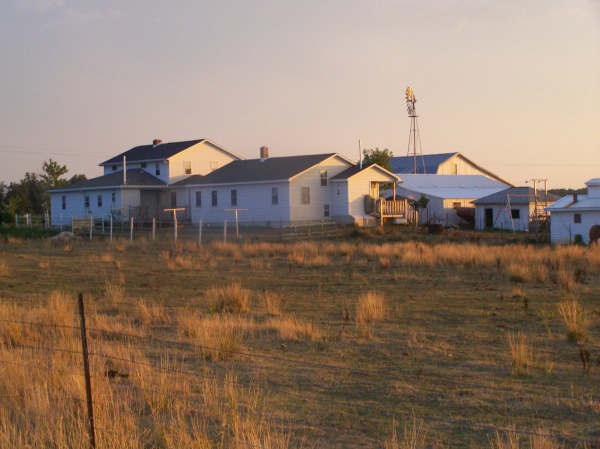
The multi-generational homes here are a sight unto themselves. A classic Adams County Amish house sprawls and adds on seemingly a gajillion times — sections added for aged parents, expansions to accommodate growing families. These homes tell a story of a community that keeps growing and keeps finding room for everyone within the same walls.
Adams County is also notable for its large population of former Amish. Most leave and join the Mennonite church, evidenced by the huge Mennonite church in Berne that boasts the largest sanctuary of any church in the country. I remember once inside a bank in Berne seeing an Amish-looking man — beard, plain dress — with a cell phone clipped to his belt, who then went outside and jumped into a Prius. The lines here are blurrier than almost anywhere else in Amish America.
Banking in Berne is its own experience. Plenty of buggies use the drive-through or the walk-up traffic window. Although I've never been entirely sure why the walk-up traffic wouldn't just go inside — perhaps some buggy owners prefer not to navigate the drive-through lane and simply hitch their horses nearby and walk to the window.
Visiting the Swiss Amish
The Swiss Amish traditions are holding on, but even unique traditional Swiss-Amish cooking is getting squeezed. McDonald's runs a brisk business in town, with a separate lot for buggies. Breakfast burritos and homemade quarter-pounders are showing up in Amish kitchens, crowding out the hearty casseroles, homemade pies and stews they have been known for.
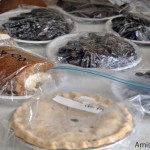
But the traditional foods are still findable if you know where to look — and worth seeking out. Raisin pie. Wedding nothings, the traditional fried dough disks. Bob Andy pie. Indiana sugar cream pie. These are distinctly Adams County flavors you won't find in Holmes County or Lancaster.
From a tourism standpoint, there is not a ton to do in the traditional tourist sense (no waterparks or sprawling Amish buffets), but one could easily keep busy all day exploring the rural roads around town looking for home-based Amish businesses and unique Swiss experiences. That is what I like to do when I visit.
Troyer's Market is a super stop and you can use that as a base to explore.
Shetler's Wholesale - an Amish emporium north of Berne is also worth a stop!
Cedarview Variety - is a classic Amish variety store on the southern end of the community, actually in Jay County, where the Amish community spills over the county line.
Scenes From The Adams County/Berne-Geneva Amish
Another interesting dichotomy of the Berne, Indiana Amish community is the "north-south" unspoken split which can be found in the community. Generally, the Amish north of Berne are considered more "progressive" and "affluent", while the Amish to the south of Berne and towards Geneva are generally considered more conservative and "less prosperous", it's a divide that still exists and causes some consternation among the two groups.
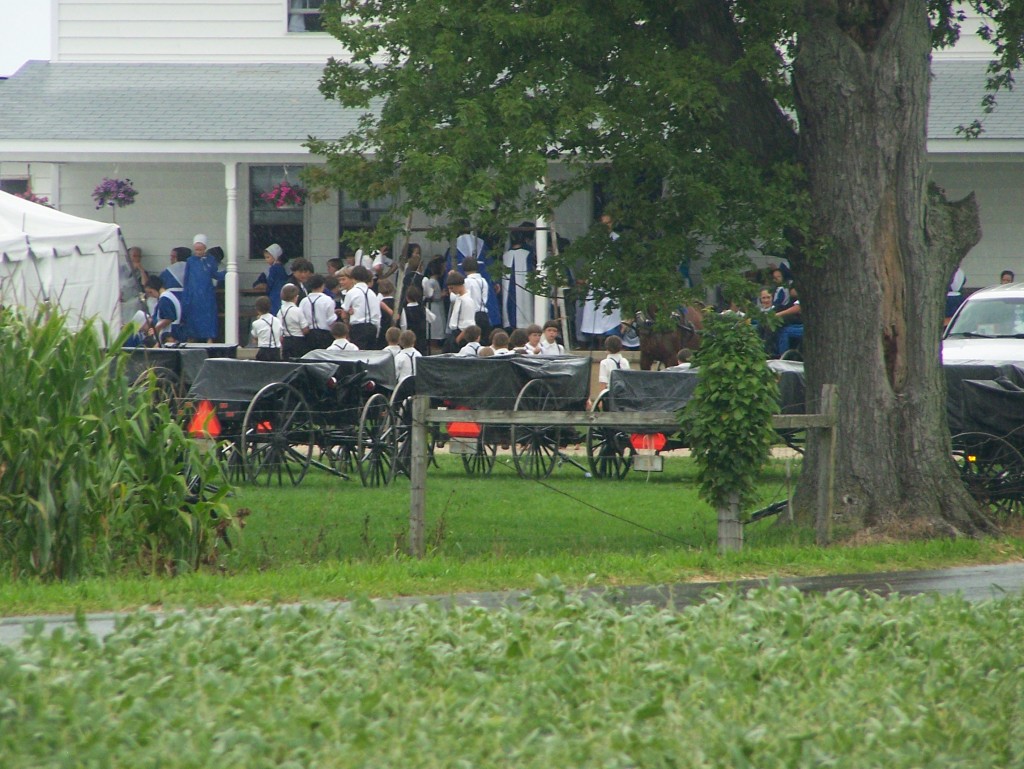
And you can run into some unusual old-meets-new scenes in Berne, such as when it's time cash the paychecks. Many Amish here work in factories.


Getting There and Getting Around
Berne sits in Adams County in the northeastern corner of Indiana, about 25 miles south of Fort Wayne and about 45 miles from the Grabill-Allen County Amish settlement to the north — making a combined visit to both communities a natural full-day itinerary for anyone serious about understanding Indiana's diverse Amish landscape.
Route 27 is your main artery through Berne, but the real experience is on the county roads that grid the surrounding farmland. Drive slowly. Watch for buggies — both topless and, increasingly, covered. Follow the handwritten signs. Stop when something looks interesting.
That's how you do Berne.



Leave a Reply