



Prep Time: 20 minutes | Brining Time: 48 hours | Storage: 6-12 months frozen | Serves: 8-10
I've never been a huge pickle fan, but I love the pickles some Amish cooks make. Whenever I'm visiting an Amish farm during the summer and am given a jar to take home they never last that long. The pickles are just the right combination of crisp and tangy and will bring to life the sleepiest of sandwiches.
This is an Amish recipe for homemade freezer pickles - perfect when you have more cucumbers than you know what to do with! You also need a little time. "Want pickles you can eat right away? Check out our refrigerator pickles that are ready in 24 hours!"
Jump to:
🤔 What Are Freezer Pickles?
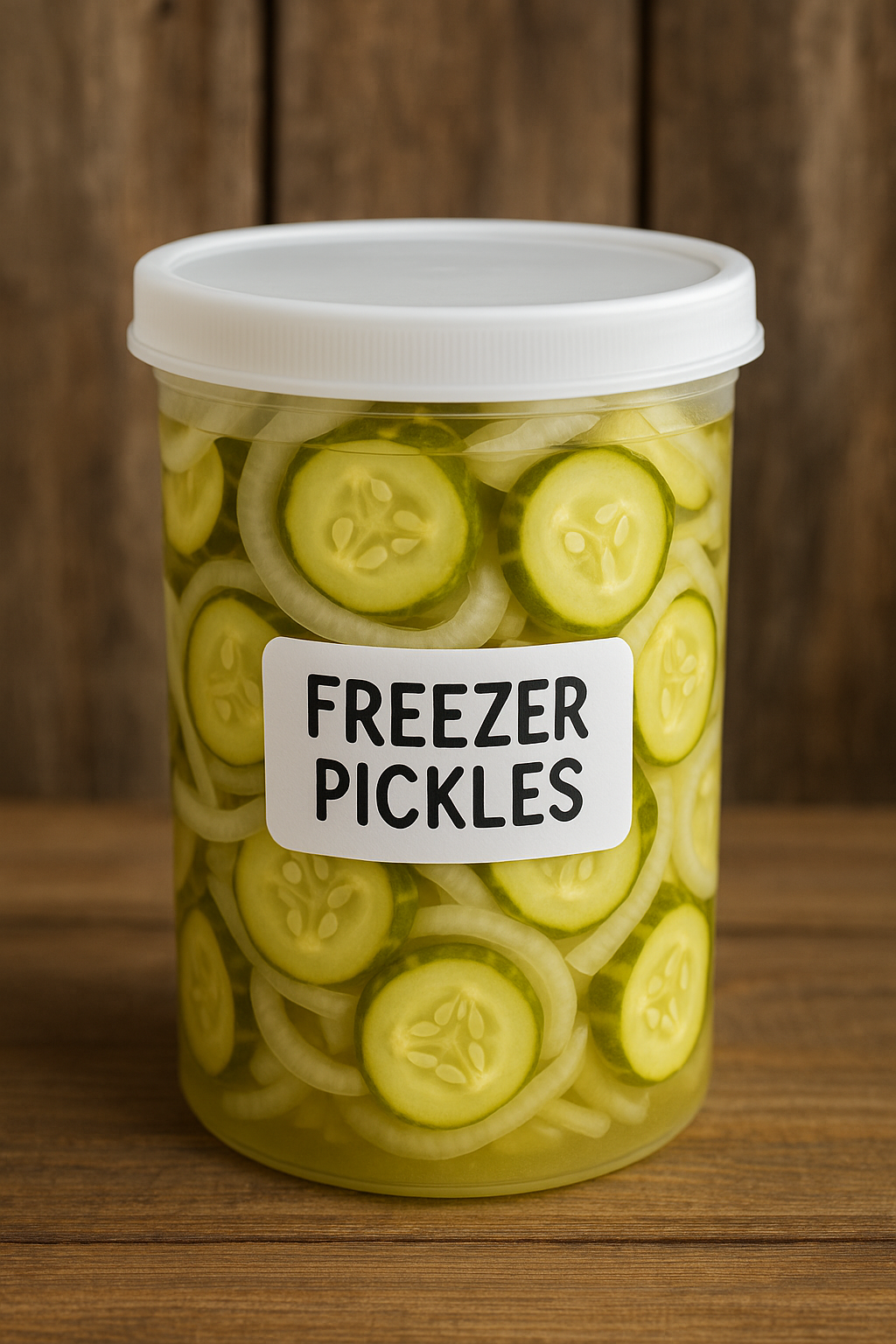
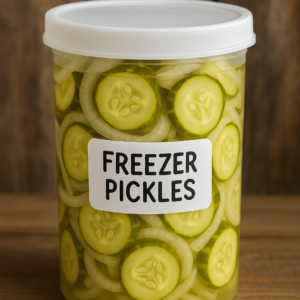
Freezer pickles are exactly what they sound like - pickles that are preserved by freezing rather than traditional canning methods. This Amish technique allows you to preserve large quantities of cucumbers from your garden harvest without needing special canning equipment or worrying about proper processing techniques.
The genius of this method is that the pickles maintain their crispness even after freezing and thawing, something that doesn't happen with regular cucumbers. The salt-brining process is key to maintaining that perfect texture that makes these pickles so addictive.
🏡 Why Amish Families Love Freezer Pickles
During cucumber season on Amish farms, the harvest can be overwhelming. A single cucumber plant can produce dozens of cucumbers, and when you have multiple plants, you need preservation methods that can handle the abundance quickly and efficiently.
Freezer pickles solve this problem perfectly. Unlike traditional canning, which requires dedicating entire days to the hot, steamy process of water bath canning, freezer pickles can be made in stages and don't require any special equipment beyond freezer containers.
Many Amish families make large batches in late summer and enjoy these crisp, tangy pickles throughout the winter months when fresh garden vegetables are just a memory.
🥒 Best Cucumbers for Freezer Pickles
Ideal Varieties:
- Pickling cucumbers (Kirby, Boston Pickling) - Dense flesh holds up best to freezing
- Young slicing cucumbers - If harvested small (under 6 inches)
- Garden cucumbers - Pick them before seeds get large and tough
Harvest Tips:
- Pick cucumbers early in the morning when they're most crisp
- Choose firm cucumbers without soft spots or yellowing
- Smaller cucumbers (3-5 inches) work better than large ones
- Use within 24 hours of picking for best results
Size Matters:
- Slice cucumbers ¼ to ½ inch thick
- Consistent thickness ensures even brining
- Don't slice too thin or they'll become mushy
🔄 Why Freeze Instead of Refrigerate?
Long-Term Storage:
- Freezer pickles last 6-12 months vs. 2 months for refrigerator pickles
- Perfect for preserving large harvests
- No risk of spoilage during storage
Convenience:
- Make large batches when cucumbers are abundant and cheap
- Portion into meal-sized containers
- Thaw only what you need
Texture Benefits:
- The freeze-thaw process actually helps the brine penetrate better
- Results in more flavorful pickles
- Maintains crispness better than you'd expect
📅 Best Time to Make Freezer Pickles
Peak Season: Late July through September when cucumbers are abundant
Batch Processing Tips:
- Make multiple batches during harvest season
- Use different sized containers for different family sizes
- Label with dates for rotation
🔧 Equipment You'll Need
Basic Equipment:
- Large mixing bowl for brining
- Colander for draining
- Freezer-safe containers (plastic containers, freezer bags, or glass jars with expansion room)
- Sharp knife for slicing
- Kitchen scale (helpful for consistent batches)
Container Options:
- Plastic freezer containers: Easy to stack, reusable
- Freezer bags: Space-efficient, portion-friendly
- Glass jars: Leave 1-2 inches headspace for expansion
📋 Step-by-Step Process Explained
The two-day brining process is crucial for developing flavor and maintaining texture:
Day 1: Salt draws moisture from cucumbers, concentrating flavors Day 2: Sugar and vinegar brine adds sweetness and tang Day 3: Pack and freeze for long-term storage
This gradual process ensures the pickles absorb maximum flavor while maintaining their crispness.
🍽️ How to Serve Frozen Pickles
Thawing Instructions:
- Thaw unopened container in refrigerator overnight
- Don't thaw at room temperature (affects texture)
- Use within 5 days after thawing
- Don't refreeze once thawed
Serving Ideas:
- Alongside hearty winter meals
- On sandwiches and burgers
- Chopped into potato salad or coleslaw
- As a tangy side with fried foods
- Diced into tuna or chicken salad
🔄 Recipe Variations
Spicy Version:
- Add 1-2 sliced jalapeños during the first brining
- Include ½ teaspoon red pepper flakes
Herb-Enhanced:
- Add 2 tablespoons fresh dill during second day
- Include 2-3 garlic cloves
Less Sweet:
- Reduce sugar to 1 cup for a more tart pickle
- Add extra vinegar if desired
🔧 Troubleshooting Common Issues
Pickles too soft after thawing?
- Use smaller, firmer cucumbers next time
- Don't skip the 24-hour salting process
- Make sure to drain thoroughly between steps
Too salty?
- Rinse pickles briefly before adding sugar/vinegar mixture
- Reduce salt slightly in future batches
Not enough flavor?
- Make sure to let each brining step go the full 24 hours
- Taste the liquid before freezing and adjust sweetness/acidity
📦 Storage and Safety Tips
Freezer Storage:
- Use within 12 months for best quality
- Label containers with date and contents
- Store at 0°F or below
- Don't overfill containers (leave expansion room)
Food Safety:
- Always use clean, sanitized containers
- Don't let cucumbers sit at room temperature during process
- If pickles smell off after thawing, discard them
🥒 More Amish Pickle Recipes
If you love these freezer pickles, try these other Amish preservation favorites:
Easy Amish Refrigerator Pickles - Ready in 24 hours, no freezing required
Dill Pickle Bread - A unique way to use pickle juice
Wilma's Pickled Red Beets - Sweet and tangy preserved beets
Rosanna's Easy Pickled Peppers - Perfect for adding to winter meals
❓ Frequently Asked Questions
Q: Can I use regular cucumbers instead of pickling cucumbers? A: Yes, but choose small, firm ones and use them quickly. Pickling varieties hold up better to freezing.
Q: How long do they last in the freezer? A: 6-12 months for best quality, though they're safe indefinitely if kept frozen.
Q: Can I cut the recipe in half? A: Absolutely! This recipe scales up or down easily.
Q: Do I have to use all that sugar? A: You can reduce it, but the sugar helps maintain texture and balances the vinegar's acidity.
Q: Can I add other vegetables? A: Yes! Onions and bell peppers freeze well with this method.
Q: What if I don't have freezer space? A: Try our refrigerator pickle recipe instead - ready in 24 hours with no freezing required!
🖨️ Full Recipe
Amish Freezer Pickles
Perfect for preserving your cucumber harvest - crisp pickles that last all winter!
Prep Time: 20 minutes | Brining Time: 48 hours | Storage: 6-12 months | Serves: 8-10
Ingredients:
- 2 quarts sliced cucumbers (about 6-8 medium cucumbers)
- 2 tablespoons salt
- 1 large onion, sliced
- 1½ cups sugar
- 1 cup white vinegar
Instructions:
Day 1:
- Slice cucumbers ¼ to ½ inch thick and place in a large bowl.
- Add sliced onion and salt, tossing to combine evenly.
- Cover and refrigerate for 24 hours. (The salt will draw out moisture)
Day 2: 4. Drain the cucumber mixture thoroughly in a colander, pressing gently to remove excess liquid. 5. In a separate bowl, mix sugar and vinegar until sugar dissolves. 6. Pour the sugar-vinegar mixture over the drained cucumbers and onions. 7. Cover and refrigerate for another 24 hours.
Day 3: 8. Pack the pickles and their liquid into freezer-safe containers, leaving 1-2 inches of headspace for expansion. 9. Label with date and freeze.
To Serve:
- Thaw unopened container in refrigerator overnight
- Use within 5 days after thawing
- Do not refreeze
Notes:
- These are really good and crisp when properly made
- Best made during peak cucumber season (July-September)
- The two-day brining process is essential for proper flavor and texture
- Don't skip the draining step - excess moisture will create ice crystals
Storage: Keeps 6-12 months in freezer at 0°F
Made this recipe? Let me know in the comments how your freezer pickles turned out! They're perfect for enjoying garden-fresh taste all winter long.
Amish Freezer Pickles
Ingredients
- 2 quarts sliced cucumbers
- 2 tablespoons salt
- 1 large onion (sliced)
- 1 ½ cups sugar
- ½ cup vinegar
Instructions
- Put ingredients - except for sugar and vinegar - in a large bowl and refrigerate for 24 hours.
- Drain
- . Mix sugar and cup vinegar and pour over pickles.
- Cover and refrigerate for 24 more hours.
- Take out of refrigerator or cellar and pack in freezer boxes. Pour syrup over the pickles and freeze.
- These are really good and crisp. To serve, thaw unopened in the refrigerator.



Barb Wright
As my mom used to say,"Don't they look beautiful?"..I can still hear my brothers laughing when she said that!! I think I'm done pickling,except for some hot peppers stuffed with sauerkraut(trust me,it's good!),and maybe some plain hot peppers. I am up to my eyes in tomatoes now..I made a batch of salsa from Lovina's recipe yesterday..it is so good!! Please thank her for the recipe. See,you can teach an old farmwife some new tricks!!
Lissa Holder
Hi Kevin! Thank you for posting the Freezer pickle recipe. Do you put all the ingredients in the beginning? I was alittle confused. (0:
Kevin
Lissa, the recipe was a little unclear, I re-edited to hold the sugar and vinegar until later...see the revised version!
Theresa
Kevin this recipe sounds great, but could you also get Lovina's recipe for canned pickles for those that don't have much freezer space? Thanks Theresa
colleen rohrer
I have made these pickles for the last few years. They are delicious and fun to make. I love taking them out of the freezer mid-winter for a wonderful treat!! Colleen
Abby
Confused...the ingredients list 1/2 c. vinegar, but the directions mention a cup of vinegar. Please help - I want to try these!
Kevin
Hi, Abby - thanks for catching that discrepancy, I'll have to change that. It should be 1 cup. Good luck, hope you are doing well!